
The Evolution of the World of Books in 2026
The world of books has undergone a seismic shift over the last decade. As we navigate through 2026, the intersection of traditional storytelling and cutting-edge technology has created a literary landscape that is more accessible, sustainable, and immersive than ever before. For bibliophiles, the joy of reading is no longer confined to the static page; it is a dynamic experience that spans physical libraries, digital ecosystems, and the circular economy.
Whether you are a seasoned collector of rare first editions or a casual reader looking for your next digital escape, understanding the current state of the book industry is essential. In this comprehensive guide, we explore how the world of books is evolving to meet the demands of a modern, eco-conscious audience while preserving the timeless magic of the written word.
The Rise of Sustainable Reading and the Circular Economy
In 2026, sustainability is at the heart of the publishing industry. The “buy new” culture of the early 2000s has been replaced by a sophisticated circular economy. Leading this charge is the global movement toward second-hand book consumption, which has significantly reduced the carbon footprint of the average reader.
- The Pre-Loved Revolution: Platforms specializing in used literature have become the primary source for readers. By giving books a second life, these marketplaces prevent millions of tons of waste from entering landfills.
- Eco-Friendly Publishing: New books are now frequently printed on 100% recycled fibers using soy-based inks. Many publishers have adopted “print-on-demand” models to eliminate excess inventory and physical waste.
- Carbon-Neutral Delivery: Logistics in the world of books have pivoted to electric fleets and drone deliveries for local neighborhoods, making the transit of knowledge cleaner than ever.
The shift toward sustainable reading isn’t just about environmental impact; it’s about the stories themselves. There is a growing appreciation for the “history” of a physical book—the marginalia left by a previous owner, the scent of aged paper, and the knowledge that a story has been shared across generations.
How AI and Technology are Reshaping Literary Discovery
While the physical book remains a beloved artifact, 2026 has seen a breakthrough in how we discover and interact with literature. Artificial Intelligence (AI) has moved beyond simple algorithms to become personalized “literary concierges.”
AI-Curated Recommendations
Gone are the days of scrolling endlessly through generic bestseller lists. Modern AI systems analyze your emotional response to previous reads, your current mood, and even your biological clock to suggest the perfect book for your specific situation. This deep personalization has helped niche authors find their audiences in an increasingly crowded world of books.
The Emergence of Immersive Reading
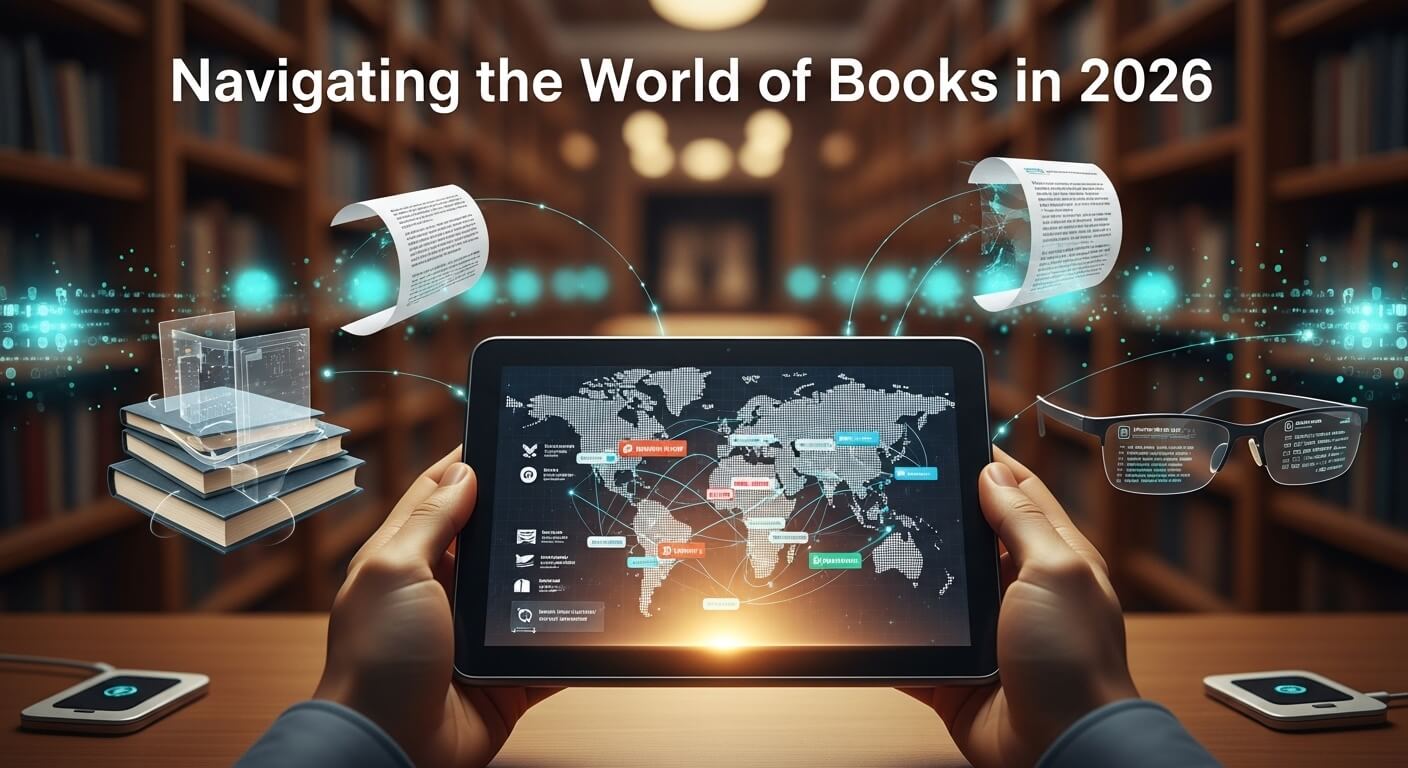
Augmented Reality (AR) has introduced a new layer to the reading experience. For non-fiction and educational texts, AR overlays allow readers to see 3D models of historical sites or scientific concepts directly on their e-reader or through smart glasses. This hybrid approach has revolutionized the way students and professionals engage with complex information.
The Resurgence of the Physical Library and Independent Bookstores
Despite the digital boom, the physical “world of books” is thriving. In 2026, we are witnessing a “Great Analog Revival.” Independent bookstores have transformed into community hubs, offering more than just shelves—they provide experiences.
What defines a modern bookstore in 2026?
- Curated Experiences: Specialized shops focusing on specific genres, such as “Eco-Fiction” or “Retro-Futurism.”
- Silent Reading Cafes: Spaces designed for digital detox, where phones are discouraged, and deep focus is celebrated.
- Book Customization Labs: High-end boutiques that offer bespoke binding services, allowing readers to turn their favorite digital manuscripts into heirloom-quality physical volumes.
Public libraries have also adapted, functioning as high-tech resource centers where citizens can access not only books but also creative tools like 3D printers, podcast studios, and VR learning modules.
Collecting in the Modern Era: Rare Editions and Digital Scarcity
The world of books has always had a place for collectors, but the criteria for “value” have expanded. In 2026, the market for rare books is split between physical antiquities and digital assets.
Traditional collectors still seek out 18th-century manuscripts and signed first editions, which have seen a 25% increase in value as physical artifacts become rarer. However, we also see the rise of “Digital First Editions”—limited-release digital copies that include exclusive author commentary or interactive elements, verified through secure blockchain technology to ensure provenance.
Investing in books today requires a keen eye for both condition and cultural relevance. Diversity in literature has become a major driver of value, with first editions from marginalized voices of the 20th and 21st centuries becoming some of the most sought-after items in the auction world.
Global Literacy Trends: A More Connected World
The world of books is more globalized than ever. Translation technology has improved to the point where “lost in translation” is becoming a relic of the past. Real-time, AI-assisted translation allows readers to access contemporary works from across the globe in their native language almost immediately after release.
We are seeing a massive surge in literature from the Global South, with authors from Africa, Southeast Asia, and Latin America dominating international bestseller lists. This cross-pollination of cultures through storytelling is fostering a more empathetic and connected global society.
The Psychology of Reading in 2026: Why We Still Need Stories
In an age of instant gratification and short-form video content, why does the world of books continue to expand? The answer lies in the cognitive benefits of “deep reading.” Neuroscientific studies in 2025 confirmed that sustained engagement with long-form narrative significantly improves empathy, reduces cortisol levels, and enhances “cognitive flexibility”—the ability to switch between thinking about two different concepts.
Reading is no longer just a hobby; it is viewed as a vital practice for mental health. “Bibliotherapy” has become a mainstream wellness trend, with doctors prescribing specific reading lists to help patients manage anxiety and social isolation.
Conclusion: The Future is Bright for the World of Books
As we look toward the remainder of 2026 and beyond, the world of books stands as a testament to human creativity and resilience. It has successfully integrated the conveniences of the digital age without sacrificing the soul of the physical medium. From the sustainable marketplaces of pre-loved novels to the immersive AR-enhanced textbooks of the future, the written word remains our most powerful tool for exploring the human condition.
The world of books is not just a collection of pages; it is a living, breathing community that welcomes everyone. Whether you read to learn, to escape, or to connect, there has never been a better time to be a reader.
Frequently Asked Questions
1. Is the “World of Books” company the same as the general book market?
While the term “world of books” refers to the entire literary industry, it is also the name of a major global retailer (often known as Wob) that pioneered the circular economy for used books. Both the company and the broader market are currently focused on sustainability and digital integration.
2. Are physical books becoming obsolete in 2026?
Quite the opposite. While digital and audio formats are popular, physical books have seen a resurgence as “prestige objects” and tools for digital detox. Sales of physical books have remained stable, particularly in the collectors’ and gift markets.
3. How can I read more sustainably?
To read sustainably, consider purchasing second-hand books, utilizing your local library, or choosing digital formats. If buying new, look for publishers that use recycled materials and carbon-neutral shipping methods.
4. What is AI-curated reading?
AI-curated reading uses advanced algorithms to analyze your reading history, preferences, and even your emotional state to provide highly accurate book recommendations that go beyond standard genre classifications.
5. Is book collecting a good investment in 2026?
Yes, rare physical books continue to appreciate in value. Additionally, the market for unique digital editions and first-run diverse literature is growing rapidly, offering new opportunities for modern collectors.


 +1 (415) 702-1019