
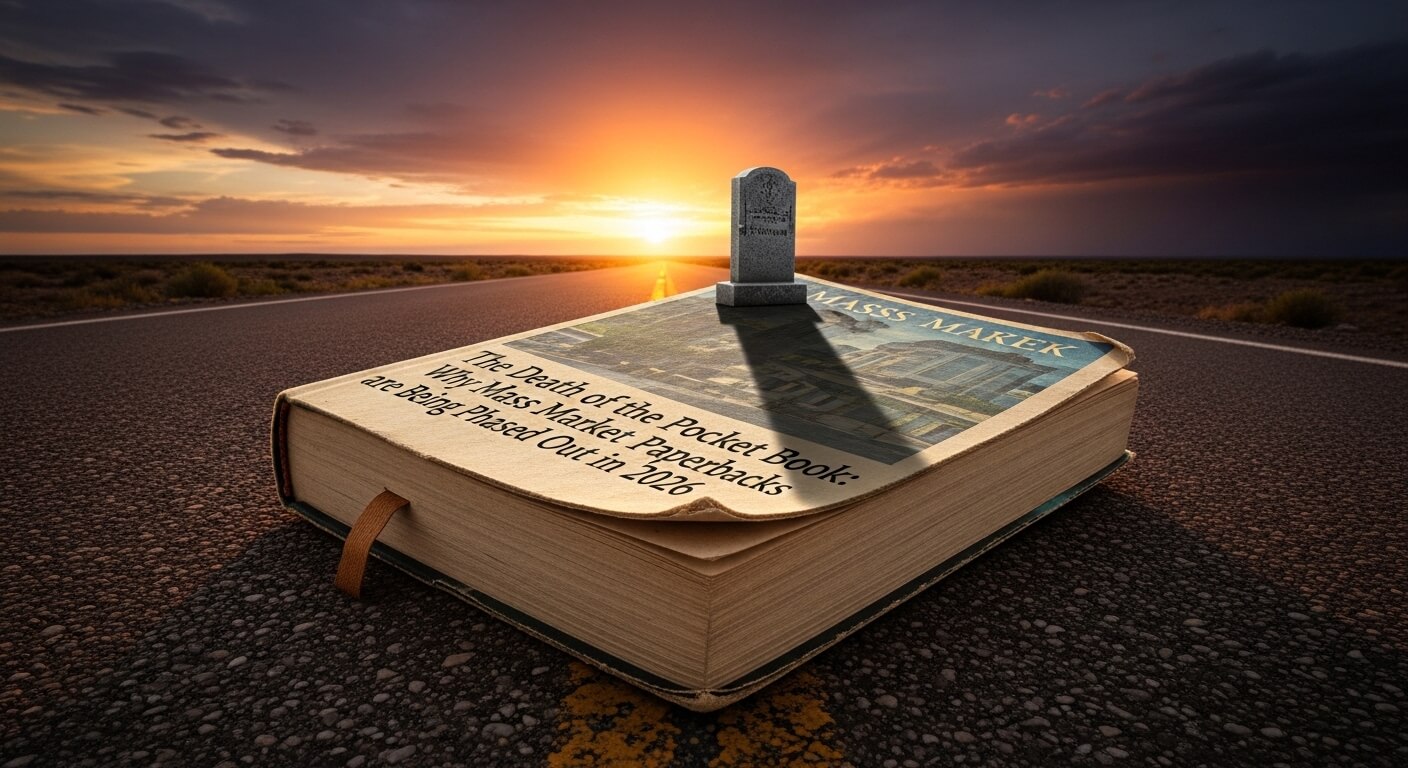
The End of an Era: Are Mass Market Paperbacks Phased Out for Good?
For decades, the 4×7-inch mass market paperback was the backbone of the publishing industry. Found on spinning wire racks in drugstores, airports, and grocery stores, these affordable, “pocket-sized” editions democratized reading. However, as we navigate the landscape of 2026, a significant shift has occurred. If you’ve noticed fewer small, chunky books on the shelves lately, you aren’t imagining things. The reality is that mass market paperbacks are being phased out by major publishers in favor of more sustainable and profitable formats.
In this comprehensive analysis, we explore the economic, cultural, and environmental factors that have led to the decline of the traditional rack-sized book and what readers can expect from the future of physical publishing.
What Defines a Mass Market Paperback?
Before diving into the “why,” it is essential to understand what is being lost. Mass market paperbacks (MMPBs) are distinct from trade paperbacks. They are typically printed on low-quality, high-acid “groundwood” paper that yellows over time. Historically, they were designed to be disposable. One of their most unique (and controversial) features was the “returnable” policy: if a bookstore didn’t sell them, they would strip the covers and send them back to the publisher for a refund, destroying the rest of the book.
As of 2026, this model has become virtually obsolete. The industry has moved toward more durable, “collectible” physical formats while delegating the “disposable” reading experience to digital platforms.
The Top 5 Reasons Mass Market Paperbacks are Being Phased Out
1. Skyrocketing Production and Logistics Costs
In the 2020s, the global supply chain for paper underwent a radical transformation. The cost of the specific groundwood pulp used for MMPBs has risen by over 40% since 2022. Publishers now find that the profit margin on a $9.99 mass market book is almost non-existent when compared to an $18.99 trade paperback. With shipping costs at an all-time high, the weight-to-profit ratio of small books no longer makes sense for Big Five publishers like Penguin Random House or HarperCollins.
2. The Rise of the “Premium Mass Market” Format
To bridge the gap, publishers have introduced the “Premium Mass Market” edition. These are slightly taller and use better quality paper than the traditional 4×7 versions. While they fit better in the hand than a large trade paperback, they command a higher price point—usually between $12.99 and $14.99. This format effectively replaced the traditional “grocery store” book by 2025.
3. The E-book and Kindle Dominance
The original value proposition of the mass market paperback was its portability and low price. Today, the Amazon Kindle and other e-readers have completely monopolized that niche. For the price of one mass market book, readers can often buy two or three digital titles. In 2026, the “beach read” or “commuter book” is almost exclusively digital, leaving physical books to serve as decorative or collectible items.
4. The “BookTok” Aesthetic and Shelf Appeal
Social media platforms like TikTok (BookTok) and Instagram have fundamentally changed why people buy physical books. For the modern reader, the book is an accessory and a piece of home decor. Mass market paperbacks, with their flimsy spines and tendency to yellow, do not offer the “bookshelf aesthetic” that younger generations crave. Trade paperbacks, with their larger covers, special finishes (like gold foil or sprayed edges), and durability, are far more popular among Gen Z and Millennial readers.
5. Sustainability and Environmental Concerns
The old “cover stripping” return policy was an environmental nightmare. Thousands of tons of paper were wasted every year. In 2026, corporate social responsibility (CSR) goals have pushed publishers to adopt “print-on-demand” models and more sustainable distribution methods. Phasing out the mass market format allows publishers to reduce waste and focus on higher-quality products that readers are likely to keep for a lifetime.
How the Transition Impacts Genres: Romance, Thriller, and Sci-Fi
Certain genres were synonymous with the mass market format. If you were a fan of romance novels, hard-boiled thrillers, or space operas, the MMPB was your primary medium. Here is how these genres are adapting in 2026:
- Romance: Most romance titles have moved to a “Digital-First” model. Physical copies are typically released as trade paperbacks or “Special Editions” for collectors.
- Thrillers: Authors like James Patterson or Lee Child, who once dominated the mass market racks, are now seeing their smaller editions replaced by the “Premium” size or trade paperbacks.
- Sci-Fi & Fantasy: This genre has seen the most significant shift toward limited edition hardcovers. Fans are willing to pay more for a beautiful book that looks good on a shelf, leading to the decline of the “pulp” paperback.
The Survival of the “Used Book” Market
While new mass market paperbacks are being phased out, the secondhand market is thriving. Vintage pocket books from the 60s, 70s, and 80s have become highly sought-after collectibles. Collectors appreciate the nostalgic cover art and the tactile feel of the old paper. In 2026, your old box of $1.00 paperbacks in the garage might actually be worth more than you think, as the format becomes a relic of publishing history.
Will the Mass Market Format Ever Return?
History in publishing is often cyclical. However, the 2026 consensus is that the 4×7 mass market paperback will not return to the mainstream. The infrastructure required to print them—specific presses and cheap paper mills—is being dismantled or repurposed for more profitable packaging materials. We may see “boutique” releases of mass market-sized books for nostalgia’s sake, but the era of the $7.99 novel at the checkout counter is officially over.
The Future of Reading: What Replaces the MMPB?
As we look forward, the gap left by the phasing out of mass market paperbacks is being filled by three distinct tiers:
- The Digital Tier: Low-cost, high-volume reading via subscriptions like Kindle Unlimited.
- The Trade Tier: The $18.00 standard for general readers who want a physical copy.
- The Deluxe Tier: $40.00+ hardcovers with sprayed edges, illustrations, and premium materials for “superfans.”
Frequently Asked Questions
Are mass market paperbacks still being printed in 2026?
While not entirely extinct, major publishers have significantly reduced their output. Most “pocket-sized” books have been replaced by the “Premium Mass Market” format, which is slightly larger and more expensive.
What is the difference between a mass market and a trade paperback?
Mass market paperbacks are smaller (4×7), use lower-quality paper, and were historically returnable by stripping the cover. Trade paperbacks are larger (usually 5×8 or 6×9), use better paper, and are sold with the same return policies as hardcovers.
Why are books getting so expensive?
The increase in book prices is due to rising paper costs, higher shipping fees, and a shift in the industry toward higher-quality physical products that serve as collectibles rather than disposable items.
Where can I still find small-format paperbacks?
Your best bet in 2026 is used bookstores, thrift shops, and online marketplaces like eBay or AbeBooks. Some independent publishers still use the format, but it is rare among major houses.
Is the “stripped book” policy still a thing?
As of 2026, the practice of stripping covers and destroying books has been largely abandoned due to environmental regulations and the shift away from the mass market distribution model.
Conclusion
The fact that mass market paperbacks are being phased out marks a turning point in literary history. While it may be sad for those who loved the portability and price of the “pocket book,” the shift reflects a more sustainable and value-driven publishing industry. Whether you choose to read on a digital device or invest in a beautiful trade paperback for your library, the way we consume stories continues to evolve with the times.


 +1 (415) 702-1019